
Semaglutide and tirzepatide — the molecules behind Ozempic, Wegovy, Mounjaro, and Zepbound — are the most consequential weight-loss drugs ever brought to market. That's not hype. The human trial data is enormous and the results are real. If you want to lose a significant amount of body weight, these compounds work better than almost anything we've had.
So this post isn't here to talk you out of them. It's here to talk about the number nobody puts on the billboard.
When people lose weight on a GLP-1, a large fraction of what comes off isn't fat. It's muscle. And almost every article you'll read stops at appetite suppression and nausea, never once mentioning the thing that will quietly determine whether you come out of this healthier or just smaller.
That's the gap I want to close. Because protecting your muscle while you lose fat isn't optional — it's the whole game.
Remember the frame from the first post: peptides are messengers. GLP-1 drugs are no exception.
GLP-1 (glucagon-like peptide-1) is a hormone your gut already releases after you eat. It's part of a signaling family called incretins. When it binds its receptors, it does several things at once: it tells your pancreas to release insulin, it slows how fast your stomach empties, and — most relevant here — it signals your brain that you're full.
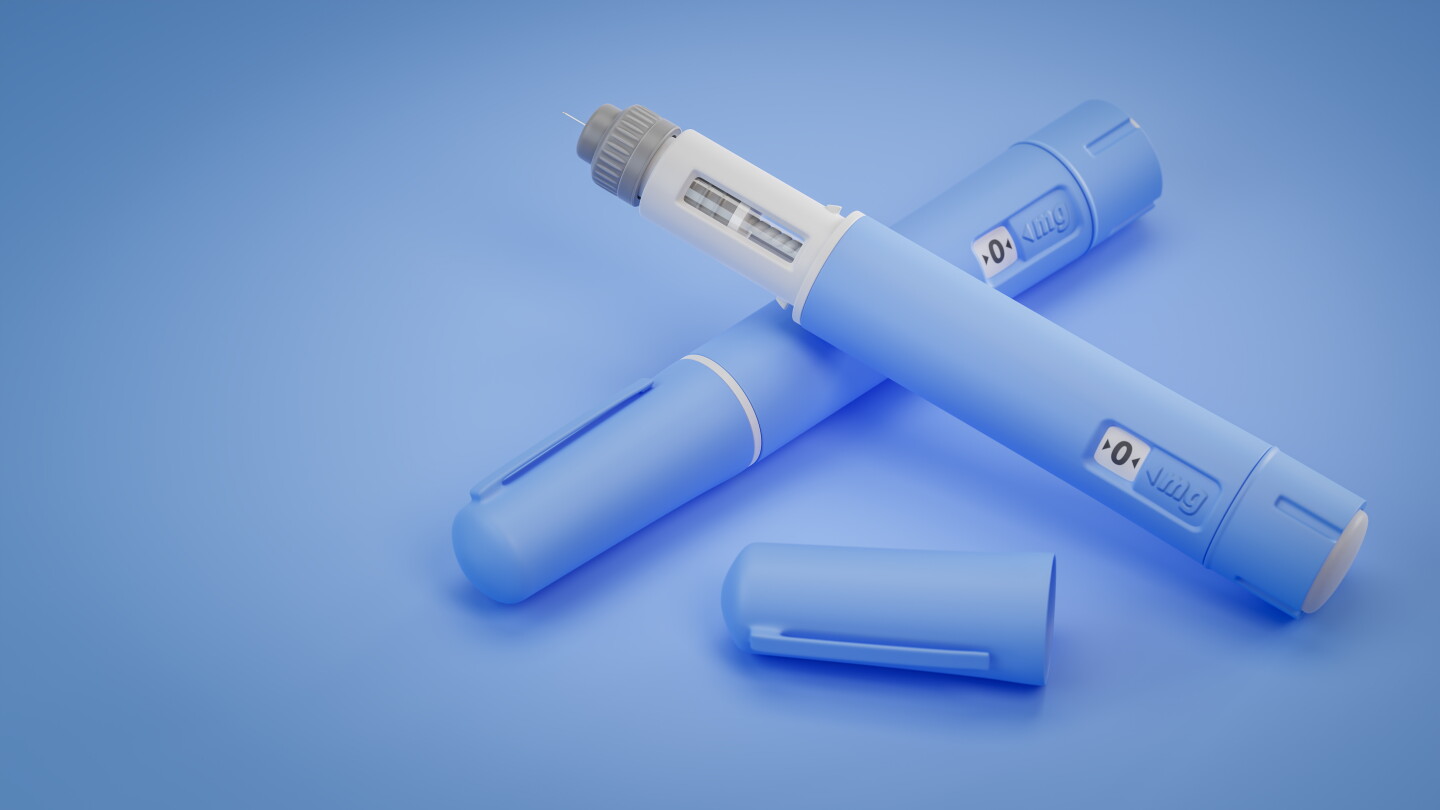
These drugs are engineered versions of that signal, modified to last for days instead of minutes. Tirzepatide goes a step further and hits a second receptor (GIP) as well. The practical result is the same: you feel full sooner, you eat less, and you lose weight.
That's the mechanism. It's elegant, it's well-understood, and it's backed by exactly the kind of large human clinical data our first post taught you to look for. This is not a research chemical. This is proven medicine.
Which is exactly why the muscle question deserves an equally honest look.
Let's put real numbers on the table.
In the STEP 1 trial, adults on semaglutide lost about 15% of their body weight over 68 weeks. Impressive. But the body-composition substudy, which used DEXA scanning to measure what type of tissue was actually lost, told a more complicated story: close to 40% of the weight lost was lean mass, not fat. Some analyses put it even higher.
Tirzepatide looks somewhat better. In the SURMOUNT-1 body-composition data, fat mass fell dramatically while lean mass accounted for roughly a quarter of total weight lost. Better ratio — but on a drug producing up to ~21% total weight loss, a quarter of a very large number is still a lot of muscle.
Now, here's the honest nuance, because being straight with you is the entire point of this series. In both trials, the proportion of lean mass relative to total body weight actually improved — you end up "leaner" on paper because so much fat came off. Defenders of these drugs point to that, and they're not wrong to.
But that framing hides something. A percentage looking better doesn't bring the muscle back. Consider someone who loses 22% of a 220-pound frame — that's nearly 50 pounds. If 25–40% of that is lean tissue, they've shed 12 to 19 pounds of muscle. You do not want to lose 15 pounds of muscle in a year. Not if you care about how you age, how strong you are, or how your metabolism runs a decade from now.
If you think of muscle as a vanity metric, this section is the most important thing you'll read all week.
Muscle is metabolically expensive tissue — it's a major driver of how many calories you burn at rest. Lose a chunk of it and your metabolism slows, which is a big reason so many people regain weight after stopping these drugs. You didn't just lose fat; you lowered the engine that keeps fat off.
Muscle is also your insurance policy for aging. It's tied to strength, balance, bone density, blood-sugar control, and independence later in life. The muscle you carry in your forties and fifties is what keeps you off the floor and out of the nursing home in your seventies and eighties. Trading it away for a smaller number on the scale is a bad deal at any age — and a genuinely dangerous one for older adults, who have the least muscle to spare.
So the goal was never just "lose weight." The goal is to lose fat while keeping the tissue that keeps you healthy, strong, and metabolically resilient. The good news: the research is now clear that you can.
Here's the cruel irony of these drugs. The exact mechanism that makes them work — crushing your appetite — is the same mechanism that makes protecting your muscle hard. You're eating far less, and if you're not deliberate, protein is the first casualty. Toast and coffee, a small salad, and you've reached dinner having eaten almost nothing your muscle can use.
That's why on a GLP-1, protein stops being a preference and becomes the organizing principle of every meal. A few principles I'd anchor to:
Hit a real target. The research consistently lands around 1.2 to 2.0 grams of protein per kilogram of body weight per day during active weight loss. When your appetite is suppressed, that's harder than it sounds — which is exactly why you plan for it instead of hoping for it.
Distribute it. Your body can only build so much muscle from one sitting. The evidence favors spreading protein across the day — roughly 30-plus grams per meal — rather than back-loading it all at dinner. Each meal needs enough to actually trigger muscle protein synthesis, and a "protein first" order at every plate is the simplest way to guarantee it.
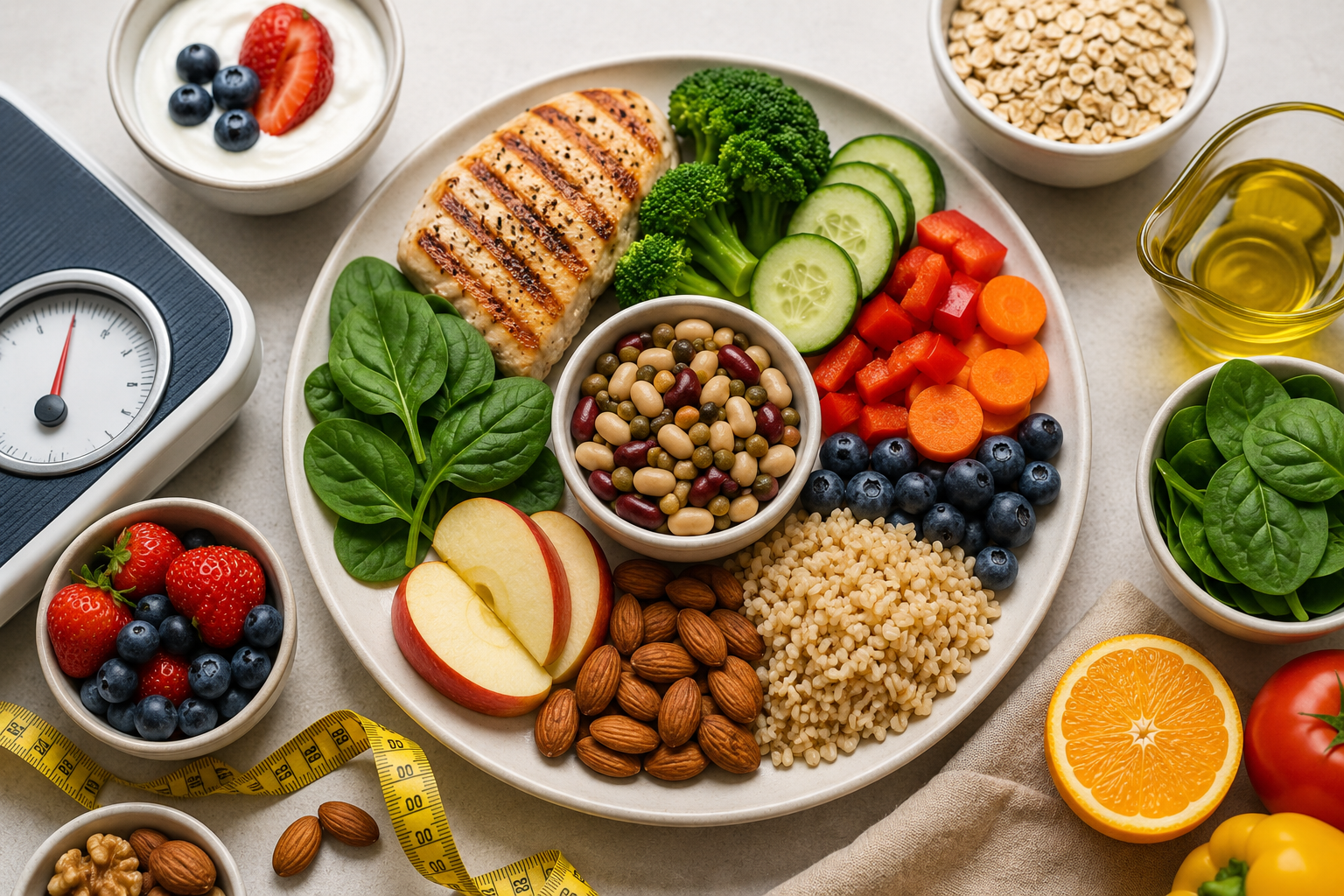
Make it whole-food dense. When you can only eat a little, every bite has to earn its place. Prioritize high-quality, nutrient-dense whole foods — real meat, eggs, fish, dairy — over ultra-processed filler. Low appetite is actually a hidden opportunity to raise the quality of everything you eat, not just the quantity.
Protein is the raw material. But raw material alone doesn't build anything. That takes a signal.
If protein is the material, resistance training is the signal that tells your body to keep the muscle instead of burning it for fuel. During any aggressive weight loss, your body is looking for tissue to shed. Lifting is how you tell it, unambiguously, not this — we're still using this.
And the data here is genuinely encouraging. A 2024 systematic review found that resistance training two to three times per week during weight loss reduced fat-free mass loss by 30 to 50% compared to not training. That's not a rounding error. That's the difference between losing muscle and keeping it.
It gets better. A 2025 case series followed people using semaglutide or tirzepatide who lifted regularly and prioritized protein. Despite losing anywhere from 13% to 33% of their body weight, several of them maintained or even gained lean tissue. A separate 2025 study of 200 adults combining these medications with resistance-training guidance and adequate protein saw roughly 13% body-weight loss with only about 3% muscle loss. Compare that to the near-40% figure from the drug-alone trials, and the picture is unmistakable.
The takeaway is one of the most empowering findings in this whole space: the muscle loss is not caused by the drug. It's caused by the absence of a stimulus to keep it. The medication drops your weight. What you do with protein and training decides what kind of weight comes off.
You don't need to be an athlete or live in a gym. Two to three focused strength sessions a week, built around big compound movements — squats, hinges, presses, pulls — and progressively challenged over time, is enough to change your outcome entirely.
GLP-1 medications are a genuine breakthrough, and the trial data earns them that word. But weight loss and fat loss are not the same thing, and the difference between them is written in muscle.
Left alone, a meaningful share of what you lose on these drugs will be the exact tissue you most need to keep. Add protein-first nutrition and consistent resistance training, and you flip the equation — the fat comes off and the muscle stays. Same drug. Completely different result.
If you're considering one of these medications or already on one, that's a conversation for you and a qualified provider who knows your history. But whatever you and your provider decide, walk in knowing this: the medication is only half the protocol. You bring the other half — and it's the half that determines who you are on the other side of it.
If you're on a GLP-1 — or about to start — the medication will take care of the weight. My job is to make sure what comes off is fat, not the muscle you'll need for the next forty years.
I build individualized nutrition and training protocols for people using GLP-1 medications: protein strategy engineered around a suppressed appetite, resistance training programmed specifically for muscle preservation, and body-composition tracking so we can prove it's working instead of guessing. Your prescription and medical management stay with your provider, where they belong. The protocol that protects your results is where I come in.
You already did the hard part by getting educated. Let's make sure the weight you lose is the weight you want to lose.
→ [Book a GLP-1 Nutrition & Performance Consultation]
This content is for educational purposes only. It describes how these compounds work and what the clinical research shows about body composition. It is not medical advice, not a recommendation to use or avoid any medication, and does not address dosing or administration. Decisions about GLP-1 medications, nutrition, or exercise should be made with a qualified, licensed healthcare provider who knows your individual medical history.
Key research referenced: STEP 1 body composition substudy (semaglutide); SURMOUNT-1 body composition data (tirzepatide); Locatelli et al. 2024 systematic review on resistance training during weight loss; Tinsley & Nadolsky 2025 case series on lean-tissue preservation; and 2025 clinical guidance on protein intake during GLP-1 therapy.
Wesley Nelson, MS is the founder and Head of Performance at Bad Batch Performance. He holds a Master of Science in Biomechanics and Kinesiology and is completing a second Master of Science in Medical Nutrition. His credentials include NASM Corrective Exercise Specialist (CES), Performance Enhancement Specialist (PES), and Certified Nutrition Coach (CNC), along with USA Weightlifting certification. A U.S. Army Infantry veteran, Wesley specializes in evidence-based performance, body composition, and metabolic health.